
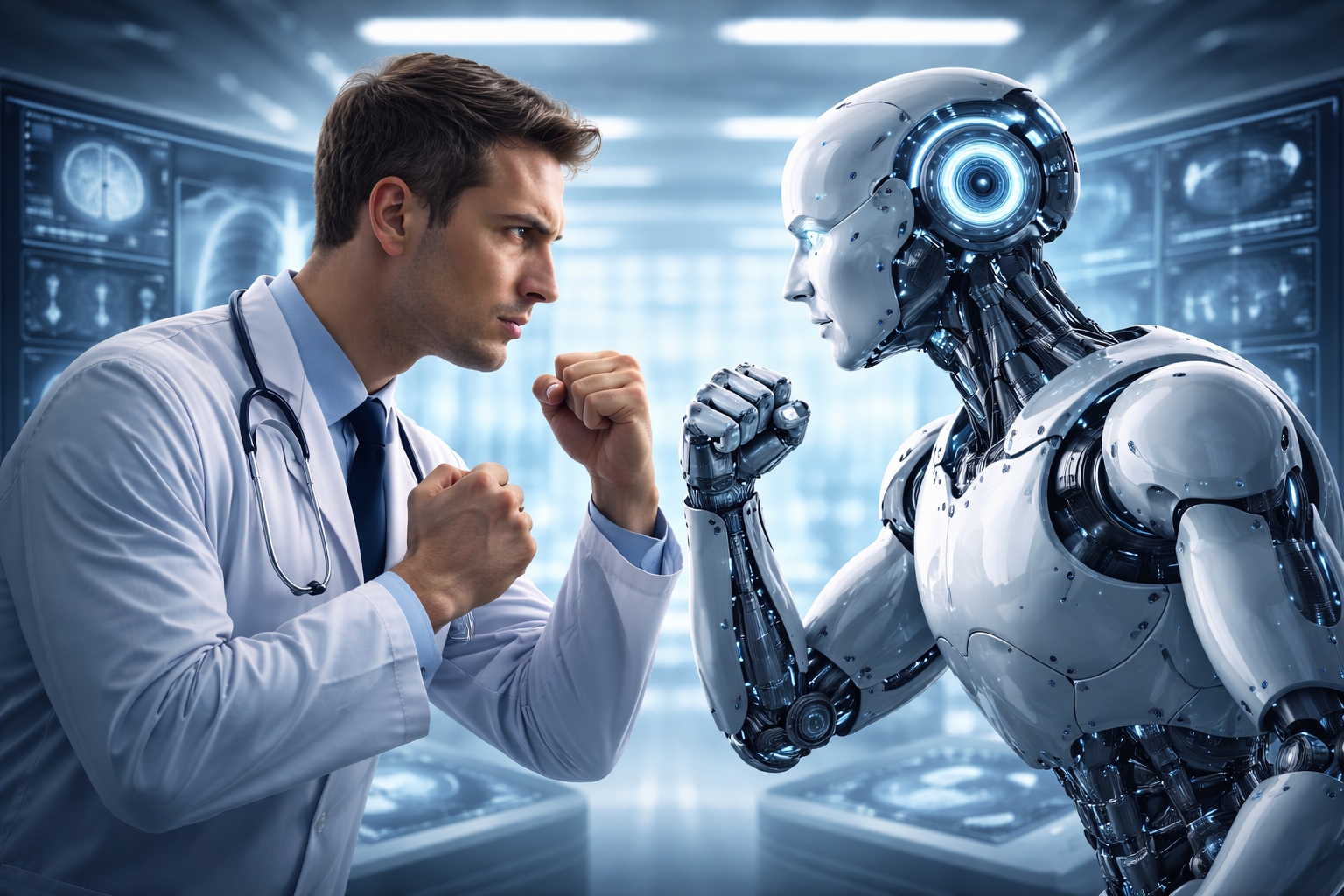
Do we still need doctors for diagnostics now that we have AI?
The improvement of AI in the last years and the huge quantity of information that these LLMs can now store an process have lead to more and more people using AI for generating medical diagnostics based on their symptoms. Now is this dangerous or just a taste of what’s to come? Can AI replace doctors, at least for the initial phases of a diagnostic?
My mother is a seasoned medical doctor specialized in internal medicine so we can assume that her diagnostics are ones of a professional doctor. For the last year or so, I have been closely monitoring the steps that real doctors take to reach a diagnostic: the questions they ask, the signs they pay attention to when first meeting a patient and the general tone they use to comfort the patient. And, of course, I compared this to how AI goes about this process and the results are interesting.
The Professional
When a doctor first sees a patient walking into his office, the first thing he looks at is his face. Do they have a healthy look? Are they pale? Do they look tired? Basically, a good doctor will identify serios issues just by looking at the patient. The next step is the actual set of questions the doctor asks to get a better idea of how the patient is feeling. Questions usually start with general topics like nutrition and sleep and based on the initial findings they start to get more specific until the doctor is satisfied with his understanding of the situation and has a possible diagnostic. But apart from the questions themselves, the tone of the doctor is very important. It is generally calm and reassuring. It makes the patient feel safe an reassures him that everything will be ok.
The Wannabe
Now, let’s take a look how a conversation with AI goes. You write down your symptoms as a prompt and wait for a response. Based on the information you provide, the AI does its best to provide you with a very detailed list of possible diseases that may cause these symptoms. And here comes the first problem usually. The initial response of the AI is generally to general. It varies from a simple cold to very serious conditions and this usually freaks out people. The last thing that a suffering patient wants to hear is the possibility of a critical diagnostic. Real doctors know this and always try to keep the anxiety down. AI only cares about the completeness of the assessment based on the symptoms.
You might think that doctors have the advantage of seeing the patient face to face, but modern LLMs also give the option of uploading photos so this gap is getting narrower these days. Also, from what I’ve noticed, AI models have started to tone down their responses in order to make people less anxious. And that’s a good thing. They start to get closer to the real deal.
The Cold Truth
All in all, AI has come a long way when it comes to giving a diagnostic based on symptoms and at this point it is a very good place to start an investigation. LLMs usually give you an initial assessment and point you to the correct doctor for an actual investigation. No harm there. At least they are honest about their limited capability. But if you feel ill, just go see a doctor. It will help you put you mind at ease.
Subscribe to our newsletter and we will notify you every time we release a new article.